Work under NDA. Some details and visuals have been adjusted. The design thinking and process are all here.
Leonteq AG · 2021
Lynqs AMC Management
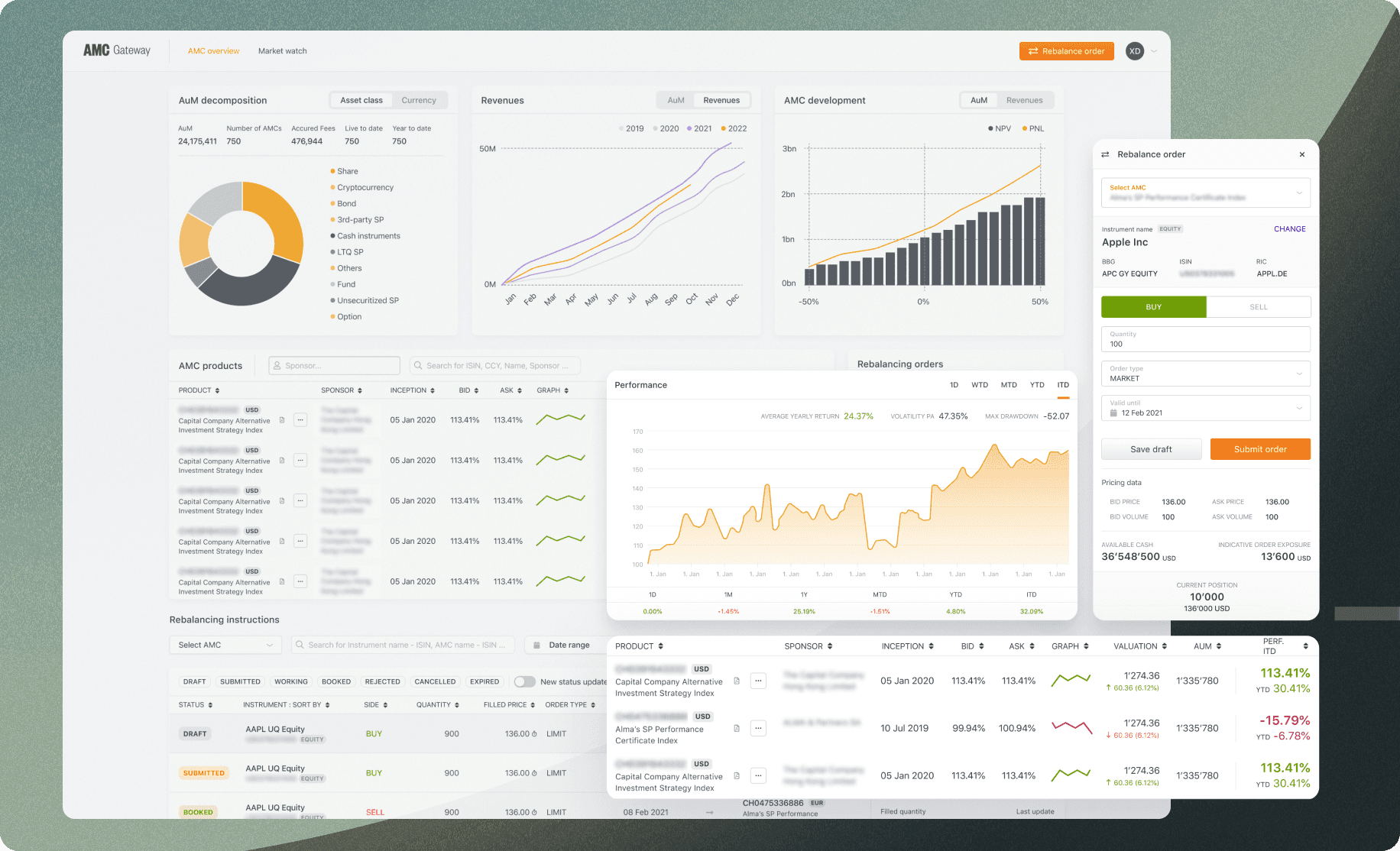
I designed the complete experience for managing actively managed certificates, working closely with portfolio managers and eight engineers.
My Role
Product Designer
Team
Sole designer · 8 engineers
Timeline
10 months
Platform
Web application
What I was responsible for
- I was the sole product designer, responsible for the screens, flows and interaction states.
- I spent four weeks learning the domain before designing the interface.
- I designed the rebalancing flow with visible risk exposure, confirmation steps and an audit trail.
- I kept important data visible and tested that decision with expert users.
Why I learned the domain first
An actively managed certificate lets a portfolio manager change a basket of assets without issuing a new product. To do that well, managers need to understand composition, performance, constraints and previous changes together.
I was the sole designer on the product. Before opening Figma, I spent four weeks with the product and operations teams learning how the instruments and rebalancing process worked. The existing mix of spreadsheets and disconnected screens made that knowledge especially important.
I needed to understand the decisions users were making before I could decide what the interface should show them.
◢ Process
- 01
I learned the mechanics
I spent four weeks with the product and operations teams, learning the instruments, constraints and rebalancing process.
- 02
I mapped the workflow
I worked with portfolio managers in Switzerland and the UK to understand the journey from a decision to its confirmation.
- 03
I defined the cockpit
With engineering, I decided what belonged in the primary view, what needed a drill-down and what required confirmation.
- 04
I tested the design
I developed wireframes and high-fidelity prototypes, refining them through three rounds with portfolio managers using real portfolio data.
- 05
I stayed through delivery
I designed alongside development for four sprints and refined the experience in two rounds after launch.
◢Key Insight“I kept the data people needed together. For these users, a clear structure mattered more than an empty screen.”
Why I kept the information visible
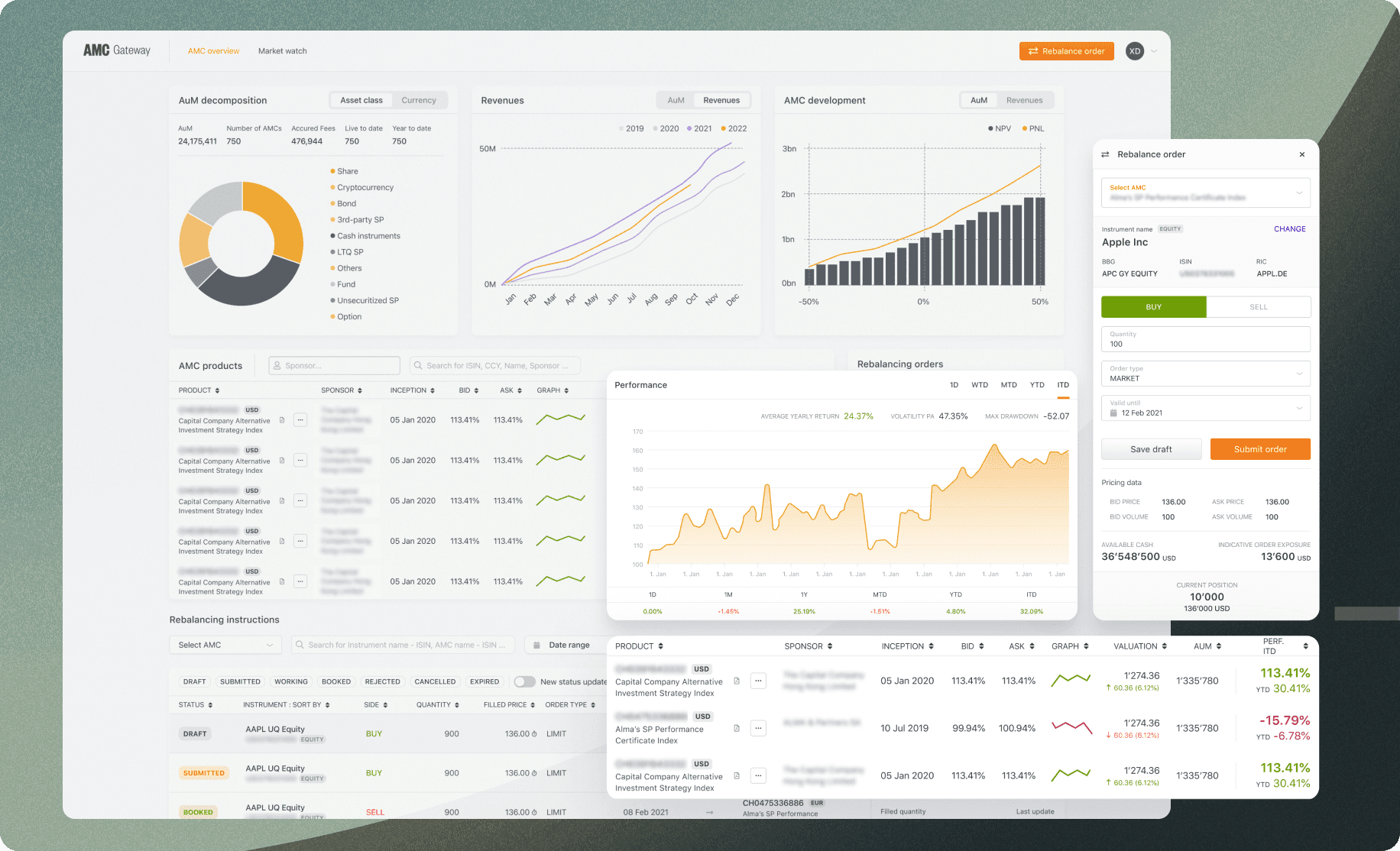
I chose to organise the density rather than remove it. Portfolio managers needed to see related information together, and hiding it across separate views would make their work harder.
I structured the cockpit around their sequence of decisions: review the portfolio, identify a change, rebalance, confirm and review the record. I designed the rebalancing flow to show risk exposure at each step and require explicit confirmation at important points.
I worked through the data hierarchy with engineering and refined the prototypes with portfolio managers. The aim was to make the next action clear without taking useful context away.
What changed
Reported project outcomes from the work we delivered.
- 65%
- reduction in time to complete a full rebalancing workflow
- 0
- rebalancing errors post-launch (vs. 3–4 per month previously)
- 12
- portfolio managers onboarded across 3 countries in 6 weeks
What I took from this project
The time I spent learning the domain changed the quality of my design work. I could discuss edge cases with engineers and ask portfolio managers more precise questions.
I took away a useful reminder: an interface for experts should respect their expertise. My job was to support their decisions, and that sometimes meant keeping more information on screen.