Work under NDA. Some details and visuals have been adjusted. The design thinking and process are all here.
Leonteq AG · 2023
Leonteq HUB
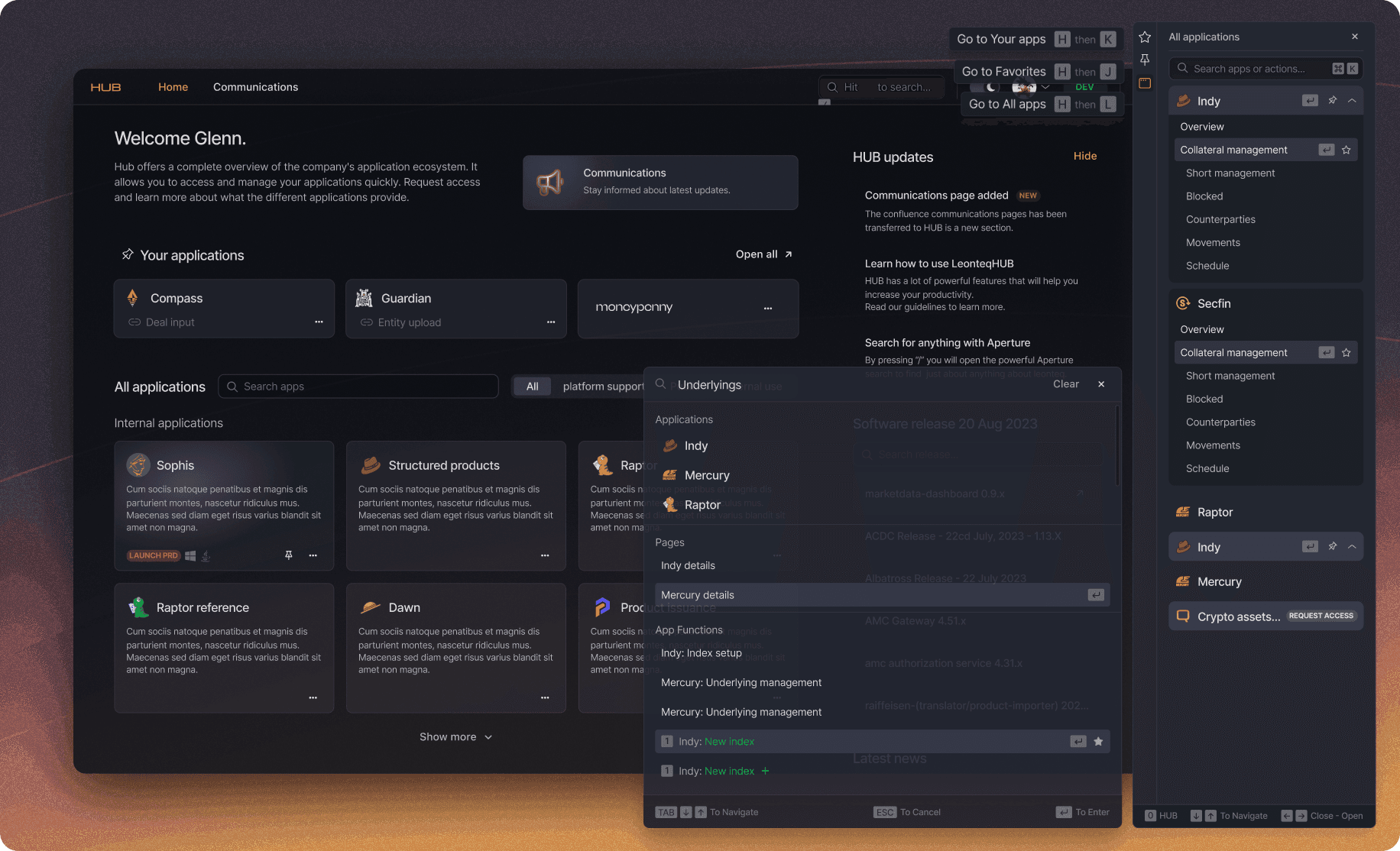
I designed a shared home for Leonteq’s internal tools, from the information architecture to the app profiles and everyday shortcuts.
My Role
Lead Product Designer
Team
4 designers, 12 engineers
Timeline
10 months
Platform
Web application
What I was responsible for
- I owned the information architecture: the app profile model, categories and navigation.
- I designed the dashboard, catalogue, app profiles and stakeholder directory across 200+ screens and states.
- I defined the embedded feature pattern with engineering and aligned product teams around a shared model for their apps.
The problem I needed to untangle
At Leonteq, finding the right tool could mean searching an outdated Confluence page or asking a colleague for a link. Each application had its own documentation, access process and team behind it. New joiners had to learn that landscape before they could get on with their work.
My job was to give that landscape a structure. I needed to make it clear what each application did, who owned it and how someone could start using it. That meant working across product teams as well as designing the interface.
◢Key Insight“I used one organising idea: every application should have a clear home, an owner and a useful next step.”
◢ Process
- 01
I mapped the landscape
I worked with new joiners, experienced users and engineering leads to understand the tools, owners and recurring tasks.
- 02
I defined the structure
I established one app profile model, a category system and clear routes to documentation, access and shortcuts.
- 03
I designed the interfaces
I translated that structure into the dashboard, catalogue, app profiles and stakeholder directory, including their states and user roles.
- 04
I refined with users
I put the designs through three rounds with new joiners, power users and managers, refining the experience around their different needs.
- 05
We released in stages
The team shipped the launcher and profiles first, then embedded features, followed by personalisation and shortcuts.
Why I started with the app profile
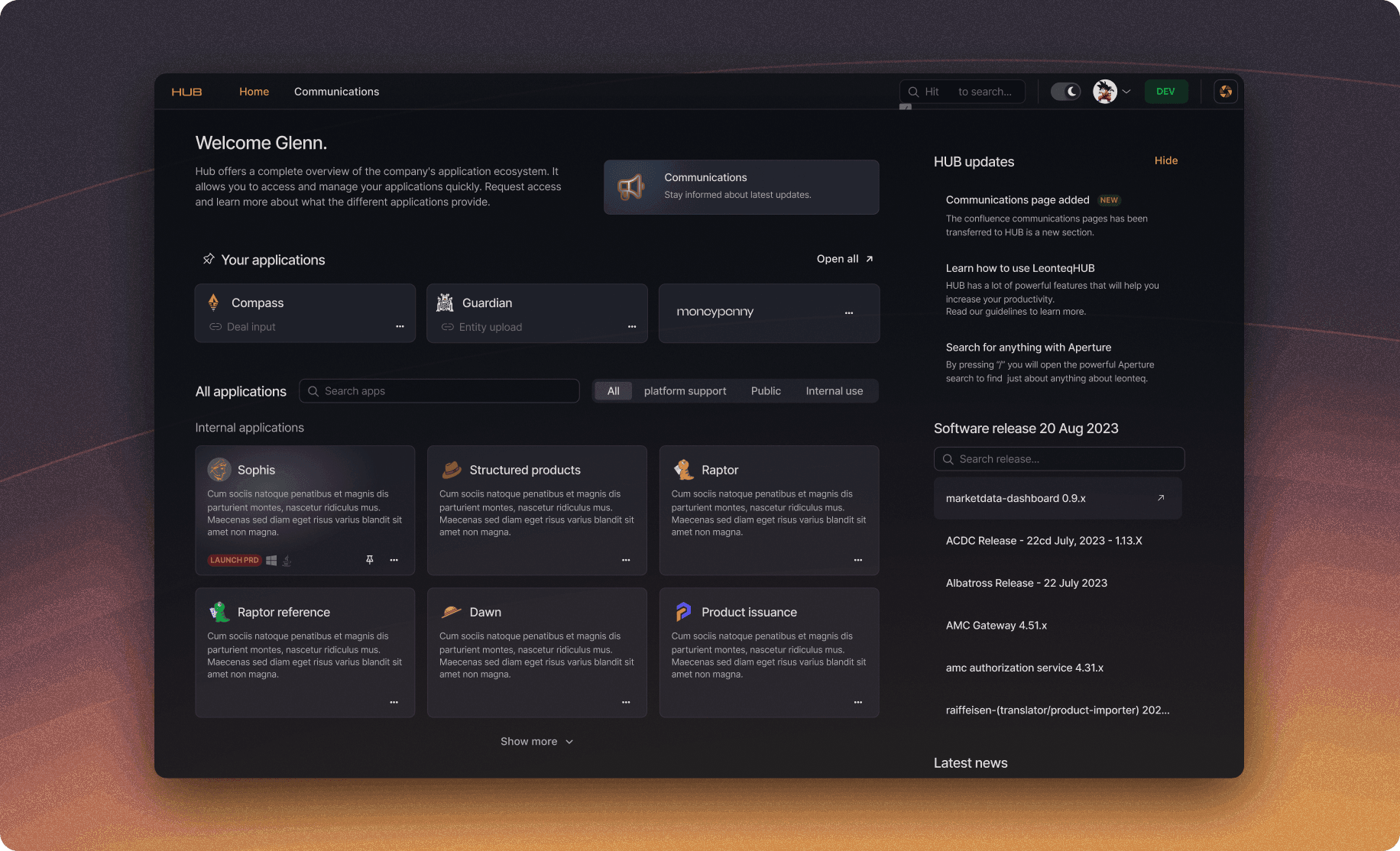
I made the app profile the foundation of HUB. Before designing the dashboard, I defined the information each application needed to expose: its purpose, owner, contacts, documentation and access routes.
I used that model across the catalogue and individual profiles. It gave employees a consistent place to look, and gave product teams a clear responsibility for keeping their own information current. The dashboard and shortcuts then made that structure useful in everyday work.
How I connected the experience
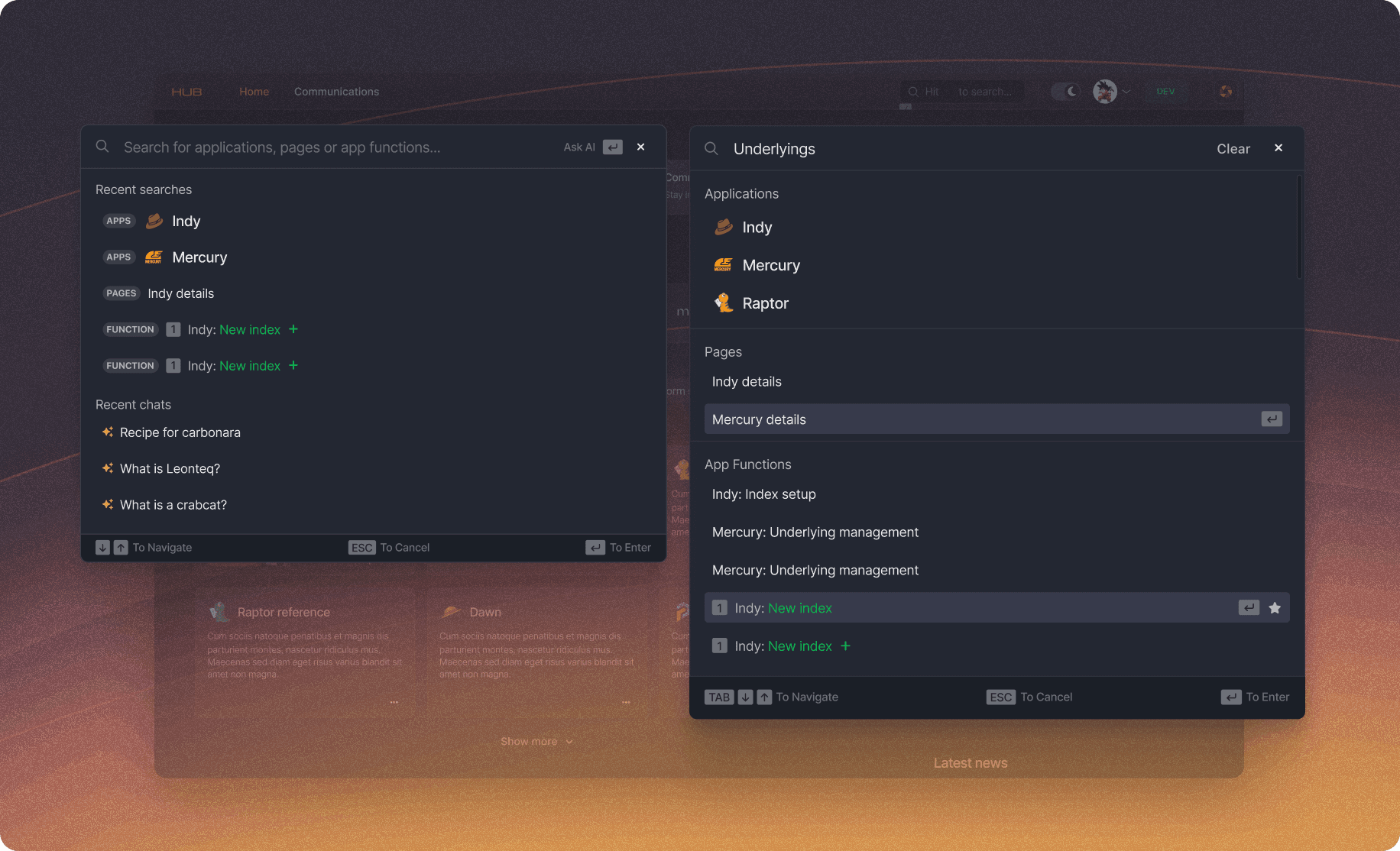
I wanted frequent tasks to feel connected to HUB. Opening a separate application for every small action would have brought back some of the friction I was trying to remove.
I worked with engineering on a pattern for embedding selected features inside HUB. My contribution was the interaction model and the consistency of the experience; integration contracts and authentication required the application teams’ engineering work. We used Moneypenny to keep those embedded interfaces familiar.
Full app catalogue, browsable by category, team, or usage frequency
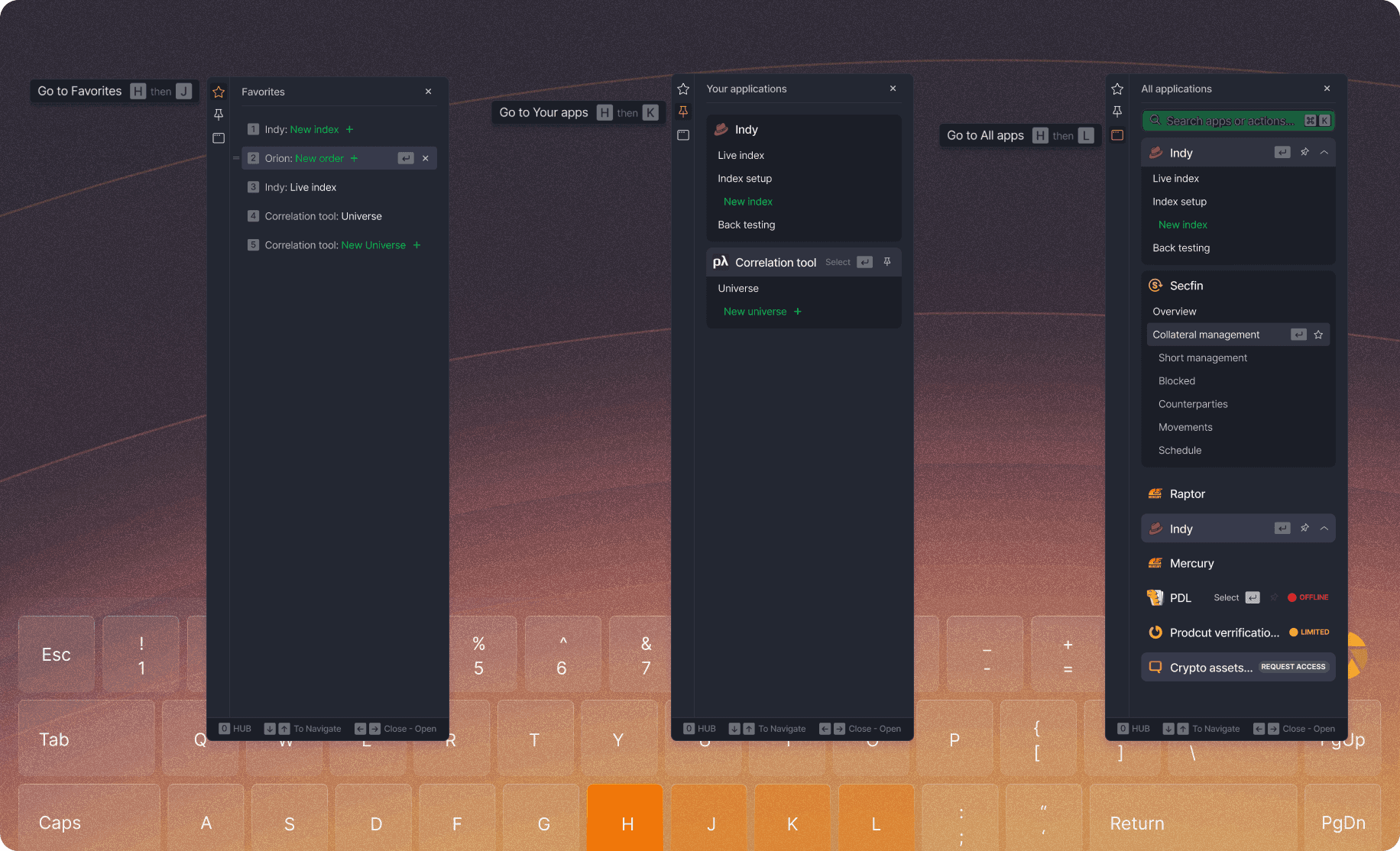
App profile: owner, stakeholders, quick-launch, and embedded feature access
What changed
Reported project outcomes from the work we delivered.
- 87%
- reduction in time to find and launch any Leonteq tool
- 3
- days onboarding vs. 3 weeks. New joiners productive in their first week.
- 1200+
- daily active users across all Leonteq offices globally
- 4.7/5
- average satisfaction score in post-launch employee survey
What I took from this project
I learned that a shared interface depends on shared ownership. I could design a clear profile page, but it would only stay useful if the team behind the application trusted the model and maintained it.
Aligning those teams was as important as the screen design. I would bring that lesson to another platform project: establish who owns the information at the same time as deciding how people find it.